
Contact us
Call +971 50 547 7393 or WhatsApp +971 50 271 5650 with your location and the pest you are seeing. We will confirm the earliest available slot, including same-day where possible.
Professional, Municipality-approved rodent control in Sharjah. Complete extermination of rats and mice combined with structural entry-point proofing so rodents can never re-infest your home, villa, or business premises.
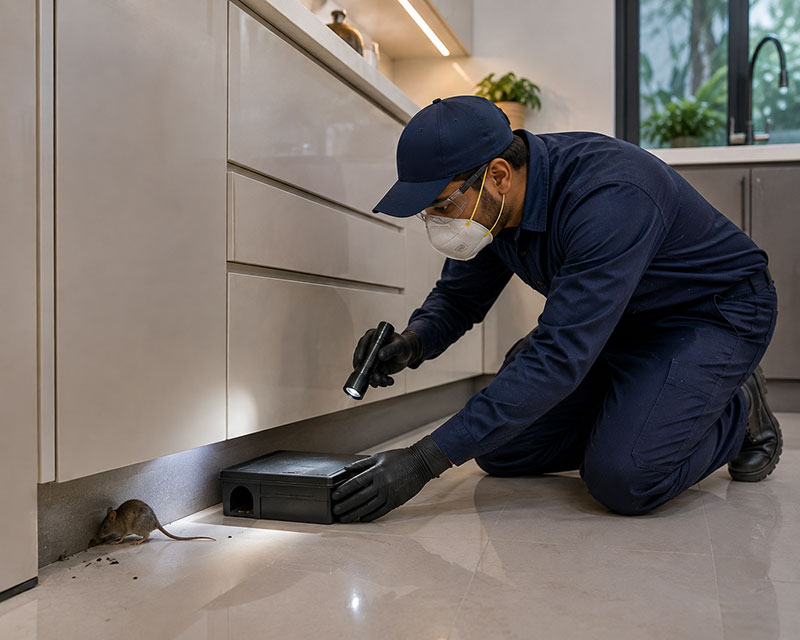
Most failed attempts at rodent control in Sharjah follow the exact same frustrating pattern: cheap bait is placed, rat activity pauses for a few weeks, and then rodents return in greater numbers. The reason is simple — baiting alone eliminates the current rodent population but does nothing to seal the gap under roller shutters, unsealed AC pipe penetrations, or damaged floor drain covers that allow rodents inside.
A juvenile house mouse can squeeze through a gap as small as a pencil (6mm); a young Norway rat needs only an opening the size of a two-dirham coin. As a premier pest control company in Sharjah providing expert pest control services in Sharjah, Clean & Green delivers a complete three-tier solution: rapid extermination of existing rodents, structural entry-point proofing with gnaw-proof materials, and elimination of the food and nesting sources sustaining the infestation.
Across Sharjah, rodent pressure is especially intense in commercial warehouses and factories throughout Sharjah Industrial Areas 1 to 18, food storage zones, restaurant kitchens, refuse disposal rooms, and luxury villas and gardens in Al Nahda, Al Majaz, Muwaileh, Al Khan, and Al Yarmook. We also treat associated crawling pests like cockroaches that thrive in the same service voids.
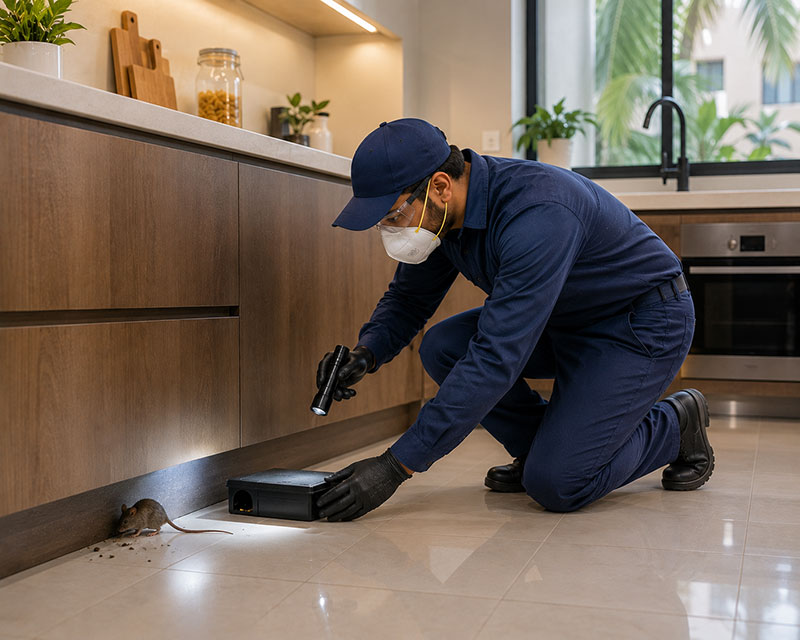
Our certified technicians use tamper-resistant, lockable bait stations compliant with Sharjah Municipality and HACCP hygiene standards, ensuring maximum safety for children, pets, and non-target animals.
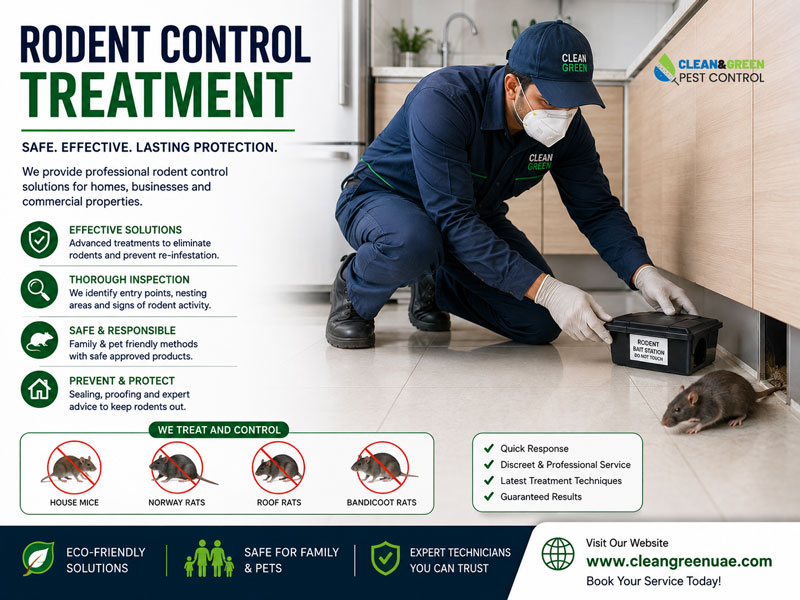
Remove, proof, then monitor — skipping the middle step is why infestations recur.
How we clear an infestation, why proofing matters most, and what it costs to leave it.
Rodents are one of the few pests where a same-day response genuinely changes the outcome, because a breeding pair becomes a colony quickly and the gnawing damage to cabling and packaging accumulates from day one. Call +971 50 547 7393 or WhatsApp +971 50 271 5650 and we will get a technician out, including outside business hours for commercial sites.
The inspection covers the interior, the perimeter, waste storage, service penetrations and roof voids where accessible. You get a written report showing where activity was found, where stations have been placed and which entry points need sealing.
We work across Sharjah — including the Industrial Areas where warehouse rodent pressure is highest — plus Dubai and Ajman. Proximity matters for rodent work because clearance is not a single visit: stations need checking and topping up, and being local keeps those follow-ups quick and reliable.
Local experience also tells us where to look. In Sharjah warehouses it is usually the roller shutter gaps and the drainage channels; in villas it is the boundary wall, the bin store and the irrigation boxes; in towers it is the refuse chute and the basement service ducts.
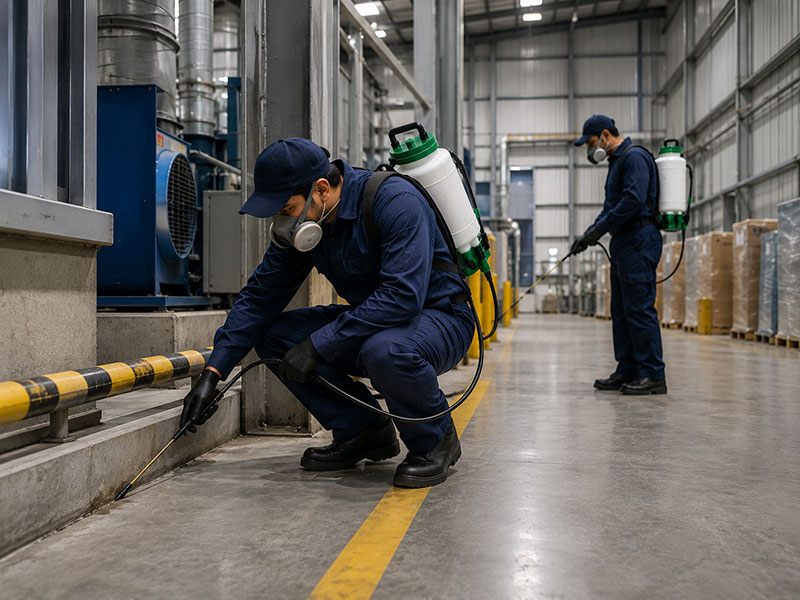
Proofing is included in our rodent control quotes rather than sold as an extra afterwards. That is deliberate: a company that only bills for baiting has a commercial reason to leave the entry points open, and we would rather not be in that position.
All bait stations are tamper-resistant, numbered and mapped on the service report, which is what food businesses and warehouse operators need for Municipality and HACCP audits. Stations are checked on follow-up visits and removed once activity has stopped.
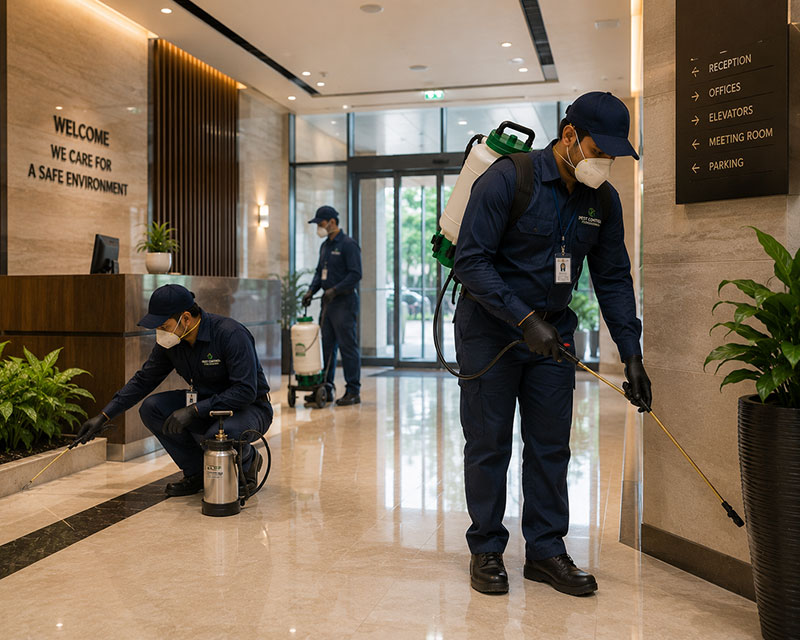
Rats gnaw continuously because their incisors never stop growing, and cabling is a favoured target. Electrical faults and fires traced back to rodent damage are a genuine risk in warehouses and ceiling voids, alongside the more obvious contamination of stock and food surfaces.
For food businesses there is a regulatory dimension too: visible rodent activity during a Municipality inspection can result in closure. Acting on the first droppings you find is far cheaper than dealing with spoiled stock, damaged wiring or a suspended licence.
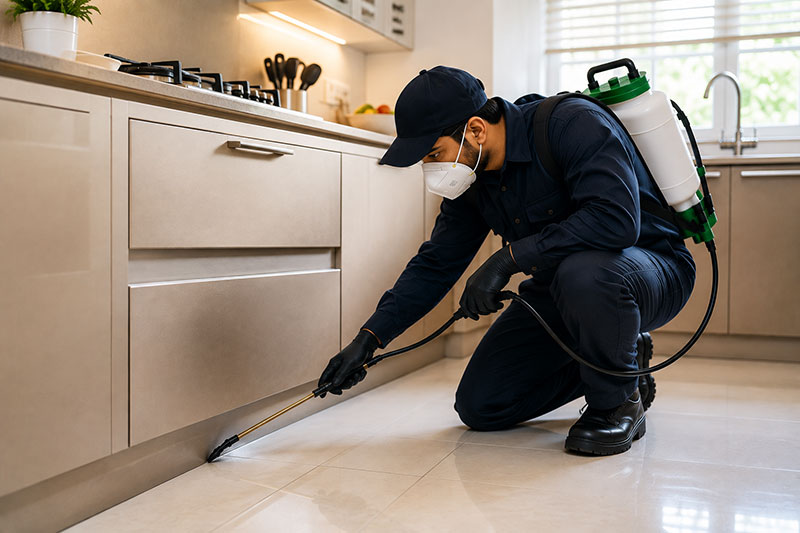
Four straightforward steps from your first call to lasting protection.
Call +971 50 547 7393 or WhatsApp +971 50 271 5650 with your location and the pest you are seeing. We will confirm the earliest available slot, including same-day where possible.
A technician identifies the species, traces the nest or harbourage, and checks entry points and moisture sources — then issues a fixed written quote.
We apply the right method for the pest and setting — gel baits, sprays, dusting or soil barriers — and seal the gaps that let them in.
We verify the result, return for follow-up visits where the pest requires it, and set up ongoing prevention so the problem does not come back.
Typically one to three weeks depending on the size of the population and how much alternative food is available. Rats are cautious of new objects, so bait uptake often starts slowly. We schedule follow-up visits to check and replenish stations, and only consider the job closed once activity has stopped and the entry points are sealed.
Bait is always placed inside tamper-resistant, lockable stations that children and pets cannot open, positioned along walls and in service areas rather than in living space. Where there are particular concerns — a nursery, a home with a curious dog — we can use snap trapping or monitoring stations instead. Tell us when booking and the technician will plan accordingly.
It is possible, and it is one reason we favour trapping in occupied residential spaces where practical, since trapped rodents are removed rather than left in a void. If an odour does develop we will attend, locate the source as closely as possible and treat the area. In most cases any smell resolves within a couple of weeks.
Yes — proofing is part of the quoted service, not an extra. We seal gaps around pipe penetrations, cable entries, damaged vents and shutter thresholds using steel wool and sealant, which rodents cannot gnaw through. Baiting without proofing simply creates a vacancy for the next population to fill.
Yes. Commercial clients receive a station map, numbered station records, product data sheets and a service report after every visit — the documentation Municipality and HACCP inspectors expect to see for warehouses, kitchens and food storage facilities. It is included in our annual maintenance contracts.
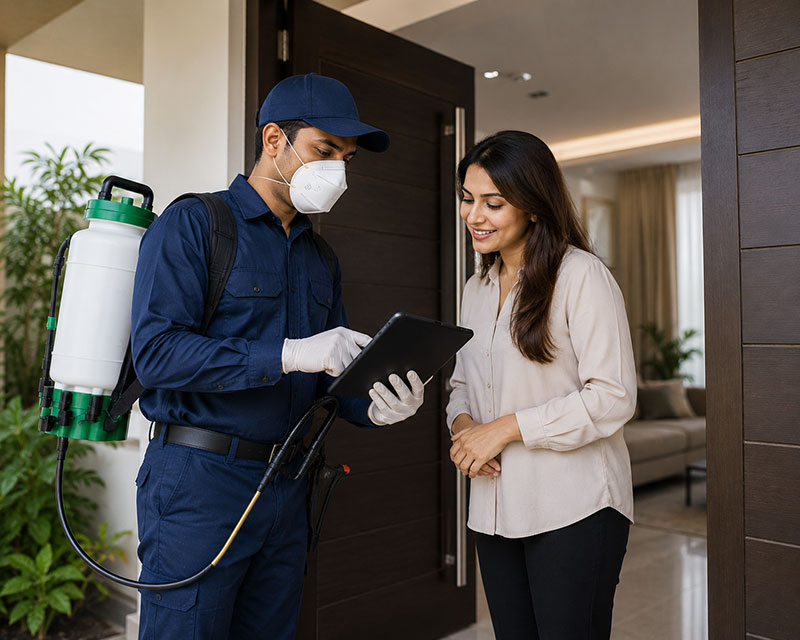
Fill in your details and our team will confirm your appointment shortly.
We have received your request and will respond within a few hours.