
Contact us
Call +971 50 547 7393 or message us on WhatsApp with your location and the pest you are seeing. We will confirm the earliest available slot, including same-day where possible.
Killing the flies you can see solves nothing if the breeding site stays. We find the source, treat it, and put the controls in place that keep kitchens and homes clear.
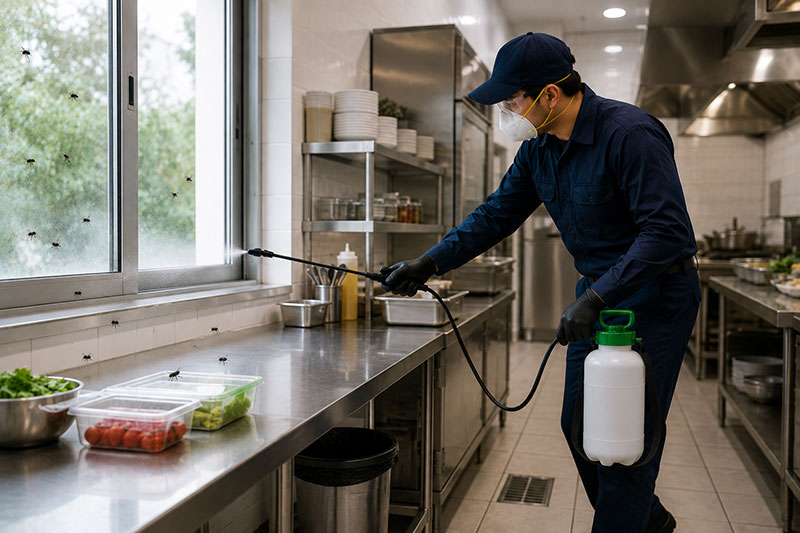
A single house fly can lay several hundred eggs, and in Sharjah's warmth those eggs reach adult flies in about a week. That is why spraying alone never works for long: the adults die, the breeding site keeps producing, and the room is busy again within days.
Effective flies control in Sharjah starts by finding where they are breeding. In our experience the source is rarely where the flies are seen — it is a bin store two doors down, a floor drain with an organic film inside it, a grease trap, a blocked gully, or standing water beneath kitchen equipment.
Once the source is treated, we deal with the adult population and put the right controls in place: fly units positioned where they work rather than where they look tidy, screens and air curtains at entrances, and clear guidance on the waste handling that keeps the problem from restarting. For food premises, every visit is documented to the standard Municipality inspectors expect.
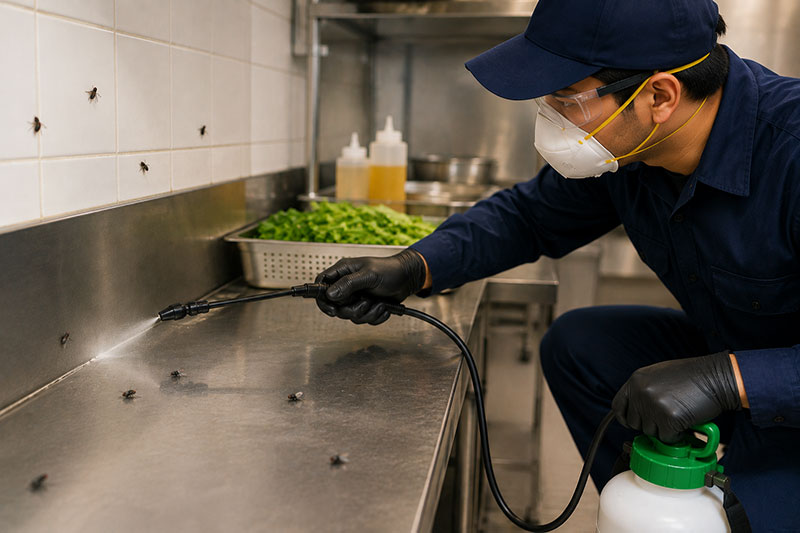
Different flies breed in different places, so the treatment changes with the species.
The classic kitchen and bin-store nuisance, breeding in waste, organic residue and anything decaying nearby.
Small flies hovering near sinks, bars and prep areas almost always breed in drains, grease traps or fermenting residue.
Once the source is gone, the job is keeping new flies out and stopping the next breeding site forming.
Finding the source, treating food premises, keeping flies out and what it costs.
Every fly job begins with a source hunt, because treating the room the flies are in achieves very little. We check drains and gullies, grease traps, bin stores and chutes, the voids under fixed kitchen equipment, standing water on roofs and in plant rooms, and any organic material accumulating outside.
The species tells us where to look. Small flies at a bar or sink point to drains; large flies in a corridor point to waste or something dead in a void. Identifying the fly correctly is what makes the difference between a fortnight of relief and a solved problem.
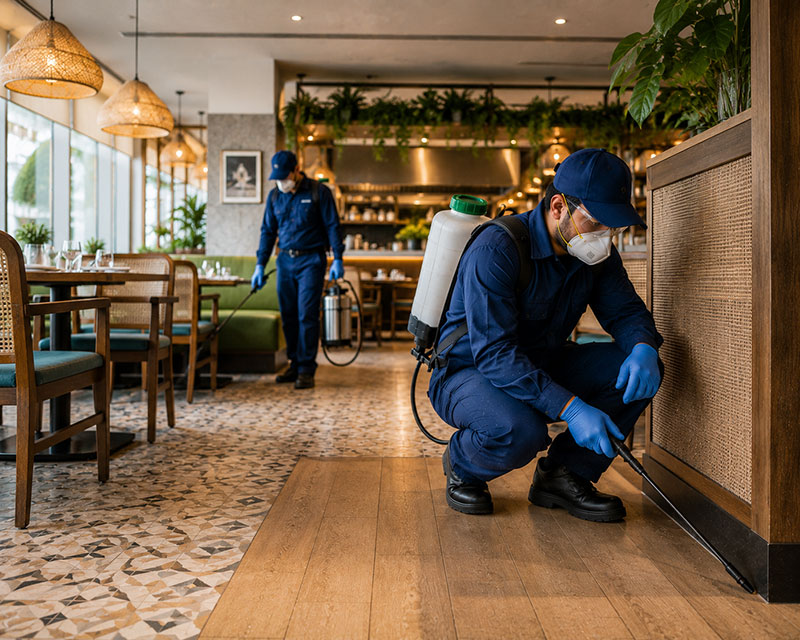
For a food business flies are a compliance problem as much as a nuisance one. Treatments are carried out after closing, and every visit produces a dated service report with product data sheets, which is the record inspectors ask to see.
We site fly units by insect behaviour rather than convenience, keep them away from open food, and service them on schedule so catch trays never become a hygiene issue themselves. Drains and grease traps go on a routine bio-treatment cycle to stop small flies re-establishing.
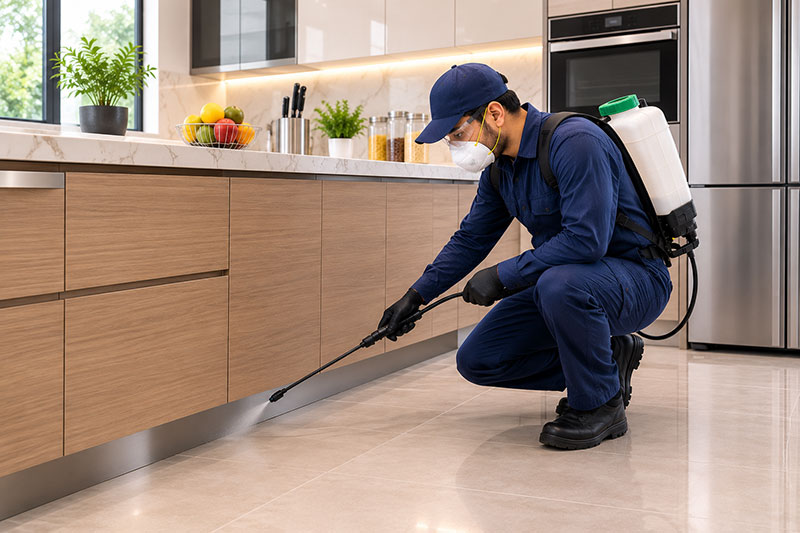
In homes the source is usually close by and easy to miss: the kitchen bin, a fruit bowl, a pet feeding area, a garden compost heap, or a drain that has not run in a while. Villas with gardens also pick up flies from neighbouring waste and irrigation.
We treat the breeding site, deal with the adults, and check screens and door seals so the next generation stays outside. Products used indoors are low-toxicity and safe around children and pets, with organic options where you prefer them.
Fly work is where shortcuts show fastest. A contractor who sprays and leaves will be back within the month, and you will pay again. We quote for finding and treating the source, because that is the only version of the job that lasts.
Our technicians are licensed and Municipality-approved, food premises get full documentation as standard rather than as an add-on, and recurring seasonal pressure is best handled on an annual maintenance package.
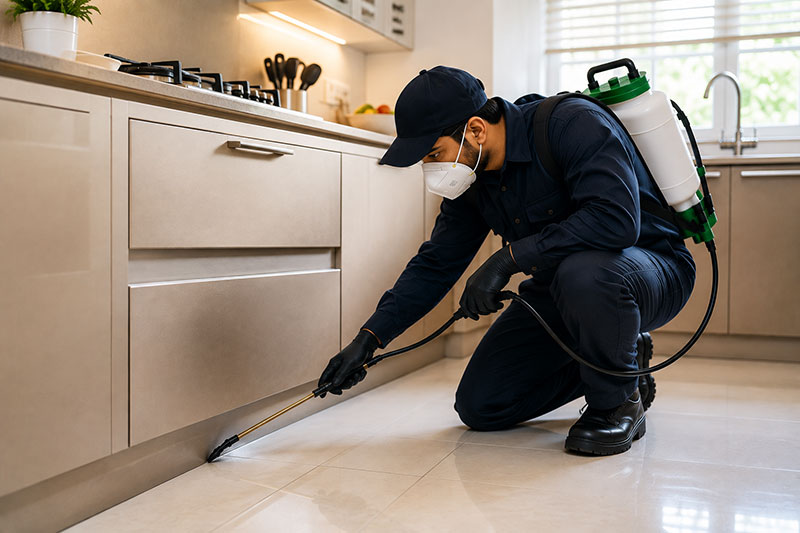
Four straightforward steps from your first call to lasting protection.
Call +971 50 547 7393 or message us on WhatsApp with your location and the pest you are seeing. We will confirm the earliest available slot, including same-day where possible.
A technician identifies the species, traces the nest or harbourage, and checks entry points and moisture sources — then issues a fixed written quote.
We apply the right method for the pest and setting — gel baits, sprays, dusting or soil barriers — and seal the gaps that let them in.
We verify the result, return for follow-up visits where the pest requires it, and set up ongoing prevention so the problem does not come back.
Because spraying kills the adults but leaves the eggs and larvae. In Sharjah's warmth a house fly develops from egg to adult in roughly a week, so an untreated breeding site refills the room within days. Lasting control means finding and treating the source, which is usually a drain, grease trap, bin store or standing water rather than the room itself.
Usually drain flies or fruit flies. Drain flies breed in the organic film that builds up inside pipes, gullies and grease traps; fruit flies breed in fermenting residue, ripe produce and drip trays. Both need the film or residue physically broken down rather than sprayed, which is why we use a bio-treatment on drains and traps.
No. Food premises are treated after closing so surfaces are clear and usable before service the next day. You receive a dated service report and product data sheets after every visit, which is the documentation Municipality inspectors expect to see on file.
No. A fly unit manages the adults that are already flying; it does nothing about breeding. Units also underperform when badly positioned, mounted too high, placed near open food, or left unserviced until the catch tray becomes a hygiene problem itself. They work well as part of a programme and poorly as the whole of it.
Yes. We use Municipality-approved products selected for the setting, applied to surfaces rather than sprayed across open areas, and organic options are available for homes and food preparation zones. Your technician will confirm how long to keep the area clear and how to ventilate before it is used again.
It depends on the property and how much drain or waste work the source requires. A home kitchen is a straightforward single visit; a restaurant with grease traps and a shared bin store takes longer and usually benefits from a scheduled programme. Inspection is free and you receive a fixed written quote before we start.
Fill in your details and our team will confirm your appointment shortly.
We have received your request and will respond within a few hours.