
Free building survey
Call +971 50 547 7393 or message us on WhatsApp. We walk the building — chutes, risers, basements, roof plant — and identify where the pressure is actually coming from.
Annual pest control maintenance for whole buildings in Sharjah — towers, apartment blocks and residential complexes. One agreement covering lobbies, refuse chutes, service risers, basements and car parks, written for building owners, owners’ associations and facility managers.
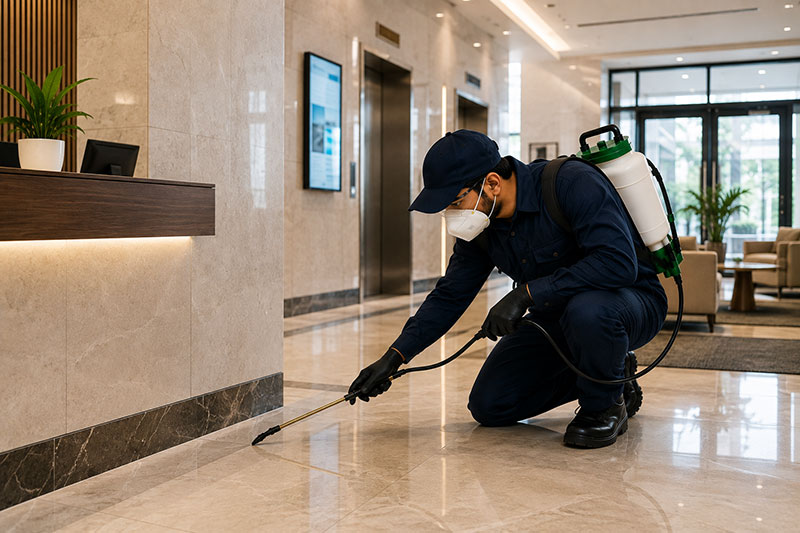
In a shared building, pest control at the level of a single apartment does not hold. Cockroaches and rodents move between units through service risers, drainage stacks and refuse chutes, so a flat treated on Monday is re-colonised from the riser behind it within weeks. A building annual maintenance contract in Sharjah solves that by treating the structure as one system rather than as forty separate jobs.
The agreement runs for twelve months and covers the shared parts of the building on a fixed calendar — lobbies and corridors, bin rooms and chutes, risers and ducts, basements, car parks and roof plant areas. Individual units can be included in the same contract or treated on request. Coverage spans the pests that actually recur in Sharjah towers: German cockroaches, rats and mice, ants, bed bugs and drain flies.
One agreement, one point of contact and one consolidated invoice. We work with building owners, landlords, owners’ associations and facility management companies across Sharjah, Dubai and Ajman — and because the same technicians return each visit, they already know which riser leaks and which bin room door never seals. For single villas and mixed portfolios, see our wider annual pest control maintenance packages.
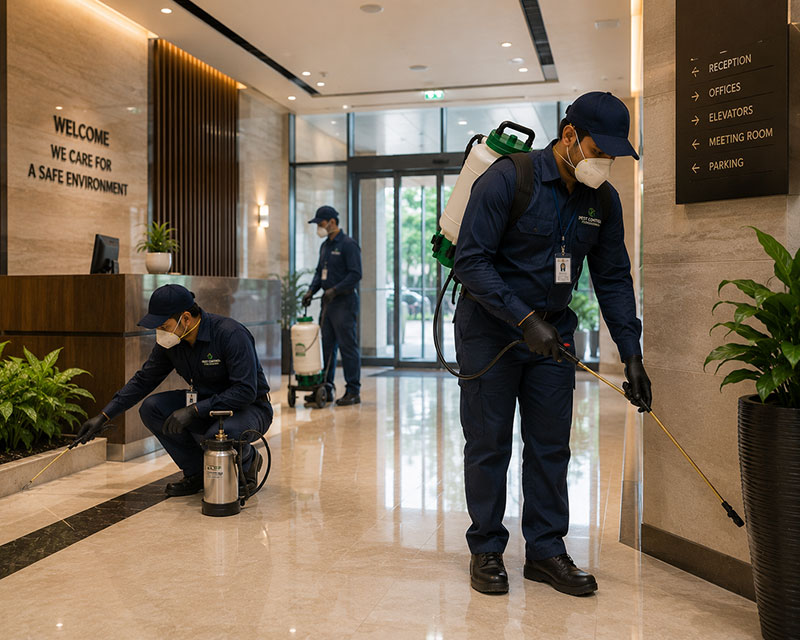
A block-wide contract targets the shared routes pests travel through — not just the apartments where residents notice them.
The first thing a prospective tenant sees, and the first place a cockroach sighting gets reported. Entrance thresholds, lift lobbies and corridor skirting are treated on a low-odour cycle timed for quiet hours, so the areas are back in normal use within a couple of hours.
The single biggest breeding point in almost every Sharjah tower. Chute walls accumulate organic residue the whole height of the building, which feeds cockroaches and flies and draws rodents into the bin room. These areas need the most frequent attention in the contract.
Risers are how an infestation in one apartment becomes an infestation in the whole stack above it. Plumbing and electrical ducts are treated and, where gaps are found at floor penetrations, we report them to building management so they can be sealed properly.
Large, dark and connected to the street by ramps and drainage, basements are where rodent pressure concentrates. Bait stations are mapped and numbered so activity is tracked between visits rather than guessed at, and the layout is planned around resident parking.
Tank rooms, pump rooms and roof plant areas hold standing water and are rarely visited, which makes them ideal for mosquito breeding and bird roosting. Treatment here is preventative — a problem found on the roof is far cheaper than one reported from the top three floors.
Apartments can be written into the contract or handled as priority call-outs when a resident reports activity. Either way the request goes through building management, residents get dated notice, and evening and weekend slots are standard so nobody has to take a day off work.
What the contract includes, how visits are scheduled across a block, how it is priced, and the documentation you get for Municipality inspections.
The contract is written around the building, not around a visit count. Shared areas are treated on a fixed calendar, residents get a route to report activity between visits, and building management gets a single point of contact instead of chasing individual job sheets.
Every scheduled visit covers the full set of shared risk points — chutes and bin rooms, risers, lobbies, basements, car parks and roof plant — using Municipality-approved products chosen for low odour in occupied buildings.
Frequency follows risk rather than a flat template. Refuse chutes and bin rooms carry the heaviest load and are usually treated monthly; lobbies, risers and basements typically run monthly or quarterly depending on the building’s history and occupancy.
Buildings with restaurants or food retail at ground level almost always need monthly attention, because a ground-floor kitchen feeds the whole stack above it. You receive the year’s calendar before the contract starts, and residents are notified ahead of any work inside units.
Pricing is fixed for the year and set after a free on-site survey, because the number of floors, the number of chutes and risers, basement levels and whether there is food retail at ground level change the job completely. You get a written proposal listing the schedule, the areas covered and the annual cost before anything is signed.
Measured per unit, a block-wide contract works out substantially cheaper than residents booking individual treatments — and it removes the repeat call-outs that happen when a treated flat is reinfested from an untreated riser.

Every visit produces a dated service report listing the areas treated, the products used with their approval references, and any findings that need building management action — a damaged bin room door seal, an unsealed riser penetration, standing water on the roof.
Bait station positions in basements and car parks are mapped and numbered, so rodent activity is tracked as a trend across the year rather than noted visit by visit. The full year’s records are available whenever a Municipality inspection calls for them.
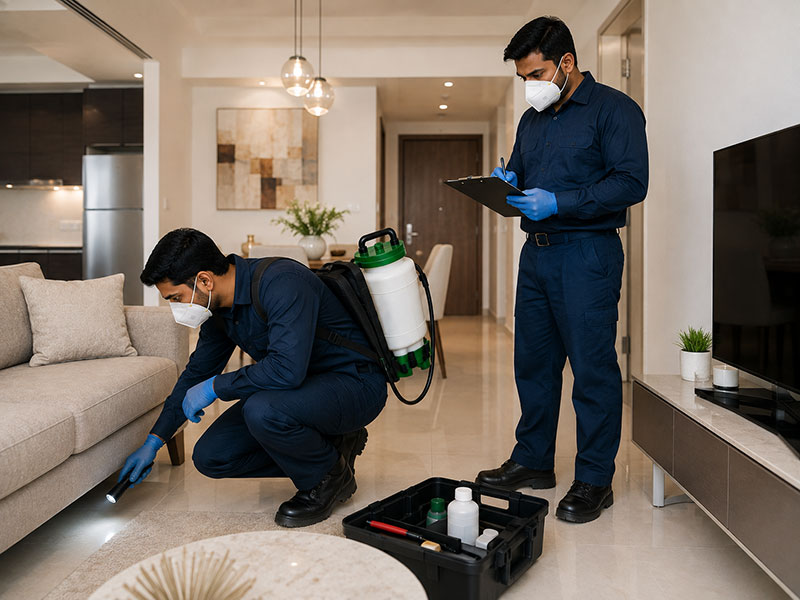
Four steps from the first site visit to a block that stays protected across the year.
Call +971 50 547 7393 or message us on WhatsApp. We walk the building — chutes, risers, basements, roof plant — and identify where the pressure is actually coming from.
You receive a fixed annual price with the visit calendar, the areas covered and the treatment methods set out in writing — ready to put in front of an owners’ association or building owner for approval.
The first visits clear the existing problem across the whole block at once — chutes, risers and basements together — so treated areas are not immediately reinfested from an untreated one next door.
The maintenance calendar runs for the rest of the year, with dated reports after each visit, priority call-outs between them, and bait station logs that show the trend rather than a snapshot.
It is a twelve-month agreement covering a whole building rather than a single unit. Scheduled visits treat the shared parts of the structure — lobbies, corridors, refuse chutes and bin rooms, service risers, basements, car parks and roof plant areas — on a fixed calendar, with priority call-outs between visits. Individual apartments can be included or treated on request, depending on how the agreement is written.
In a shared building, cockroaches and rodents travel between units through service risers, drainage stacks and refuse chutes. Treating one apartment while the riser behind it stays untreated means the problem returns within weeks. A building contract breaks that cycle by treating the routes pests actually use, which is why block-wide programmes cost less per unit than repeated individual call-outs.
Usually the building owner, the owners' association, or the facility management company acting on their behalf. We issue one agreement, one point of contact and one consolidated invoice for the whole block, so individual tenants are not billed separately. Tenants receive notice of visit dates and can request access to their unit through the building management.
Most residential buildings in Sharjah run on a monthly or quarterly cycle for common areas, with refuse chutes and bin rooms treated more frequently because they are the main breeding point. Buildings with restaurants or food retail at ground level usually need monthly attention. The free survey sets the frequency and you receive the full year's calendar before the contract starts.
Common area work is scheduled for quiet hours and uses low-odour, Municipality-approved products, so lobbies and corridors are back in normal use within a couple of hours. Basement and car park work is planned around resident parking patterns. Where apartments are included, residents are given dated notice and evening or weekend slots.
Every visit produces a dated service report listing the areas treated, the products used with their approval references, and any findings that need building management action such as damaged door seals or blocked drainage. Bait station positions in basements and car parks are mapped and numbered so activity is tracked between visits. The full year's records are available on request for Municipality inspection.
Fill in your details and our team will confirm your appointment shortly.
We have received your request and will respond within a few hours.